The Process of Creating a Light Painted Still Life - Part 1 - Composition
Jun 28, 2026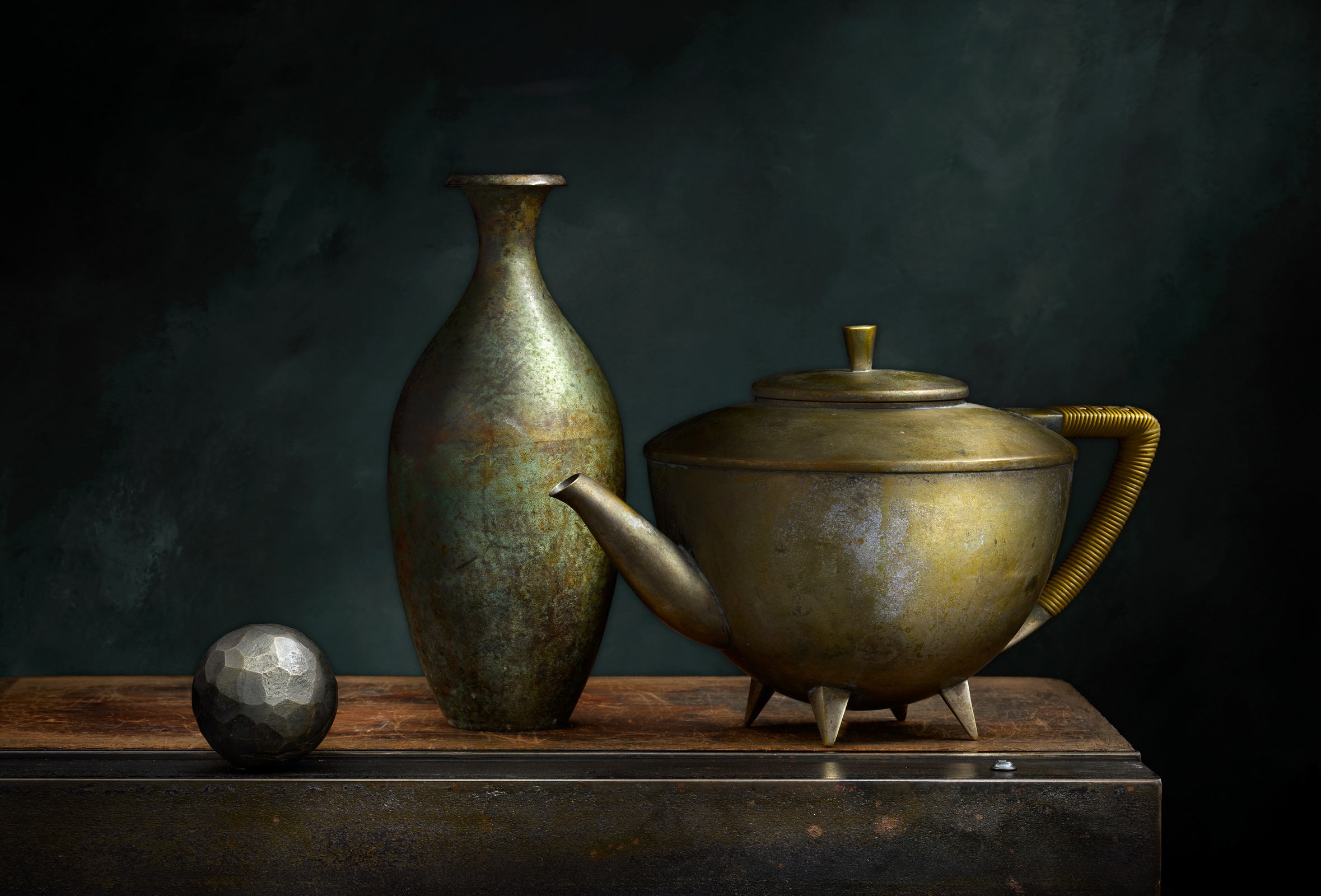
Japanese Teapot and Vase ©Harold Ross
In this "behind the scenes" article, the first of a series of three, I'll explore the aspects of Composition.
In upcoming blog posts, I will similarly explore Shooting as well as Editing!
These three articles will outline the entire Light Painting Workflow.
People have frequently asked me about the actual steps I take (and teach) in my Light Painting process, so I thought it might be beneficial to outline these steps I take each time I engage in creating a light painted still life image.
For clarity, I'll use a question-and-answer format.
*****
• Do the subject elements drive the composition, or is it vice-versa?
It certainly can be either (or both). Sometimes, I select a subject or subjects that pique my interest. I then establish a designated "stage" where these subjects can reside within the image. I believe in the power of simpler images, so my compositions often consist of a single element, with perhaps one or two additional elements added to achieve a visual balance. I resist the temptation to excessively add elements! Then, I refine the composition until it feels balanced. I exercise caution to avoid distractions (such as tangent points, stacking, etc.) and I provide guidance on what compositional flaws to avoid in my course video on Composition.
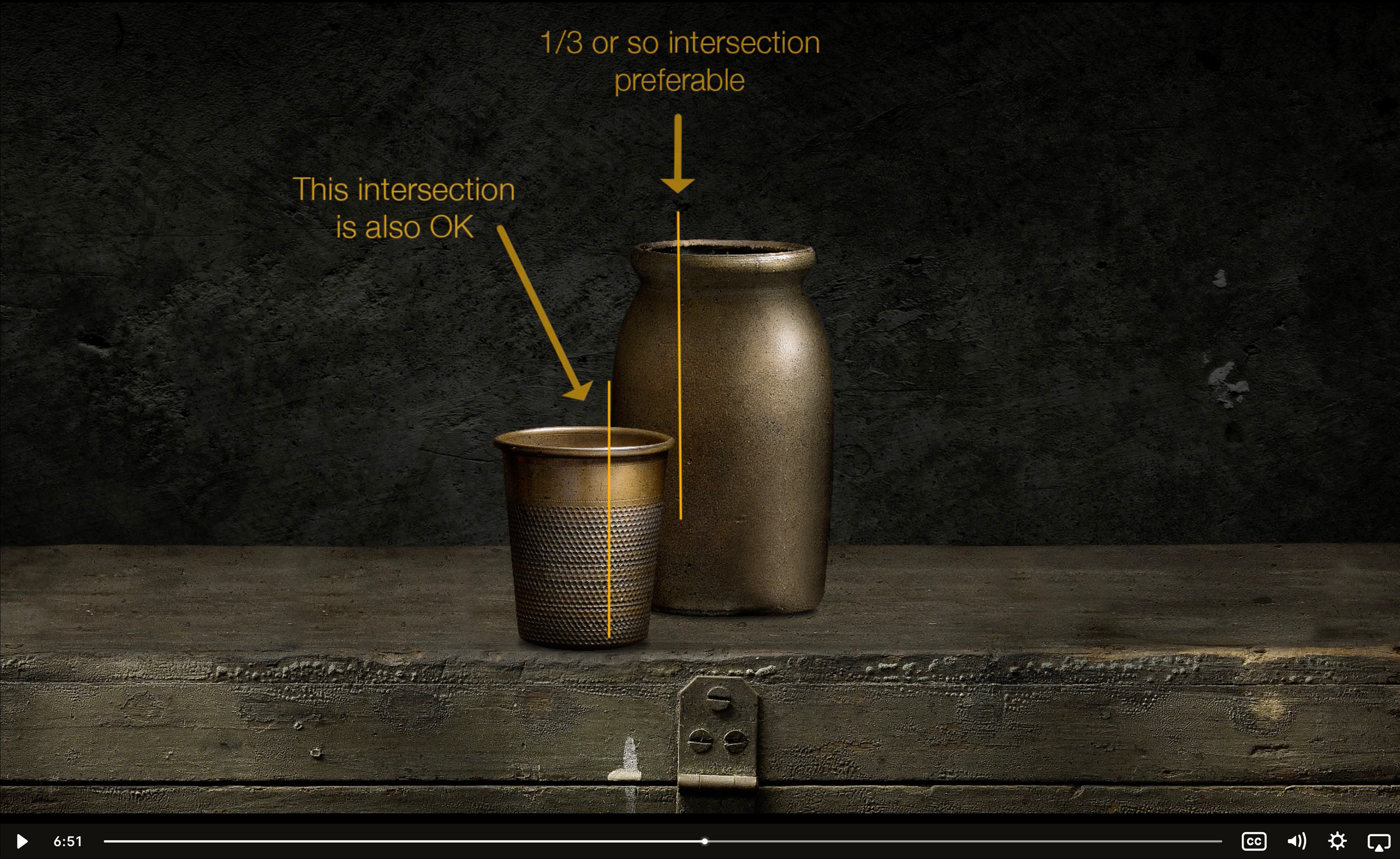
Screen Capture from Course Video
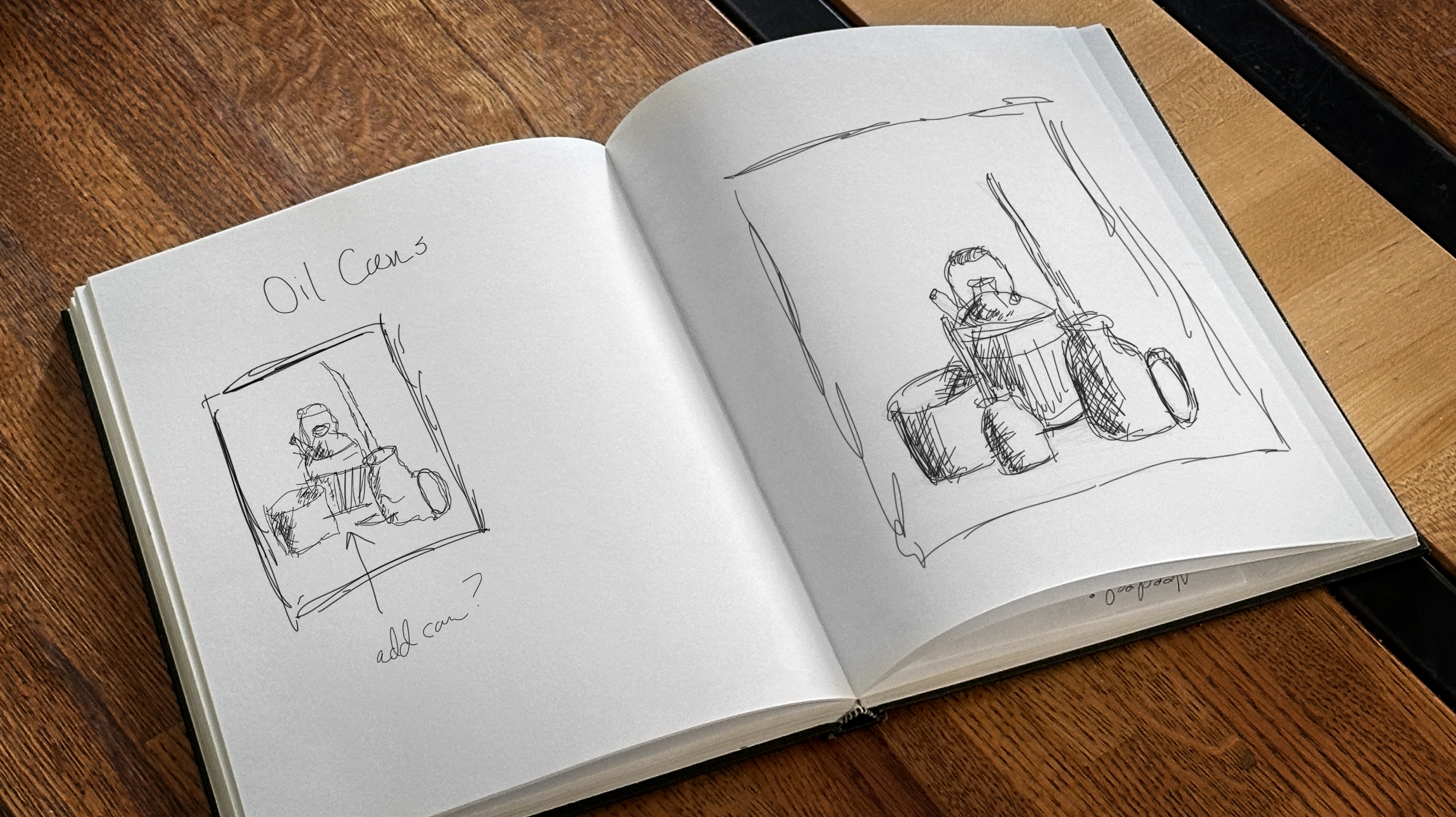
At other times, I may develop a concept ahead of time, prior to even picking up a still life subject. Often, I'll begin these kinds of images with sketching… I feel that sketching with a pencil and paper helps me work out general shapes and helps me determine what elements can get across the concept that I'm trying to put forth. Don't worry, you don't need to be a trained artist to sketch. Just grab a pencil and create shapes and refine. It doesn't have to look good, but It can be a great aid in the composition phase!
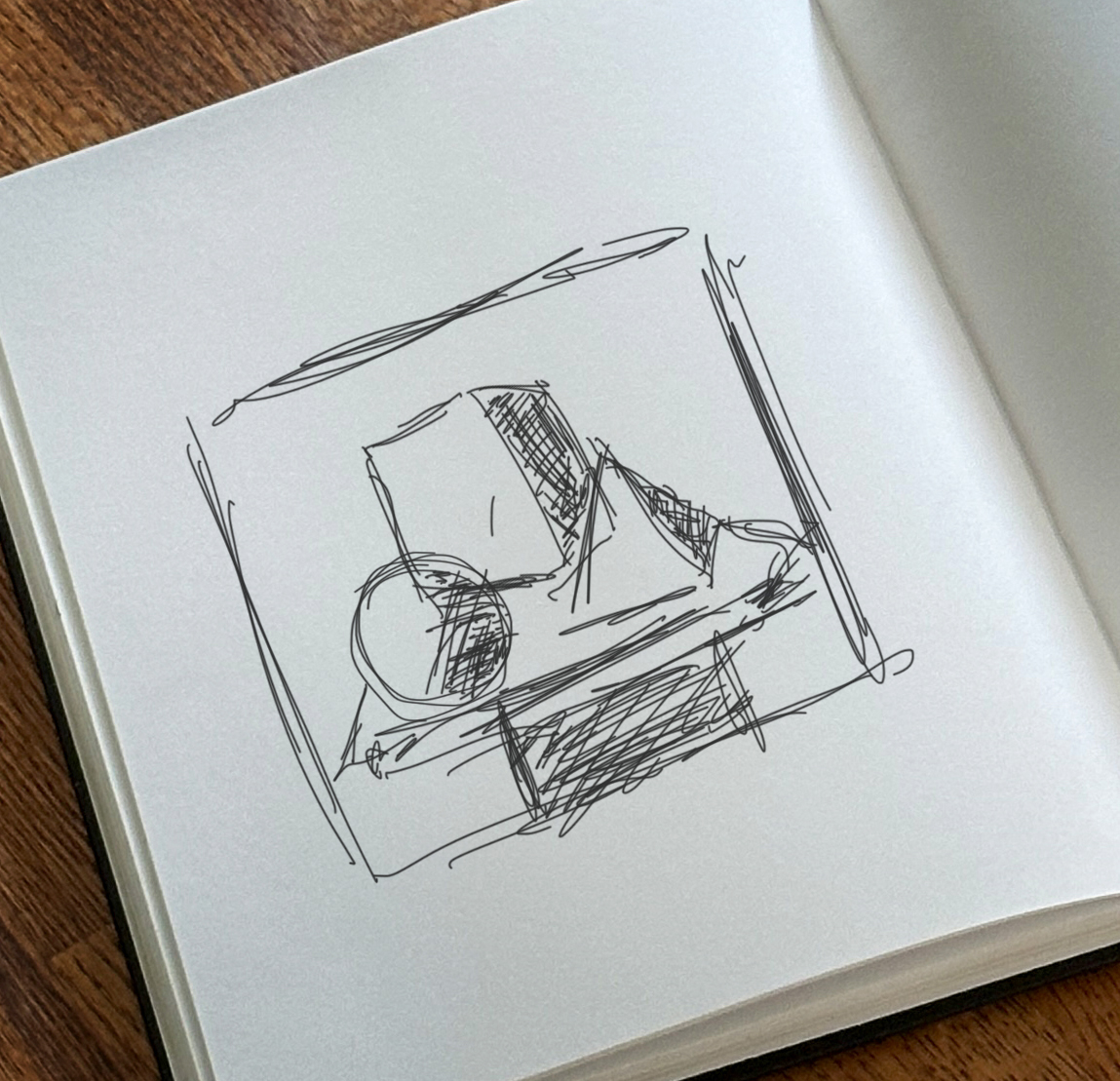
And sometimes, I'll begin the concept process by simply working with shapes. I'll just work on a purely two-dimensional idea, and then when I arrive at something that I like, I will then seek out still life subjects to work with the shapes and sizes that my sketch suggests. Sometimes, I don't mind if the subjects are "foreign" to each other. In fact, interesting compositions can be created when using subjects that are completely unrelated!
*****
• Are good compositions always a result of following the "rules of composition"?
I certainly think it's a good idea to learn about the "rules of composition", such as the Rule of Thirds, the Fibonacci Sequence, etc. Learn them, then ignore them!
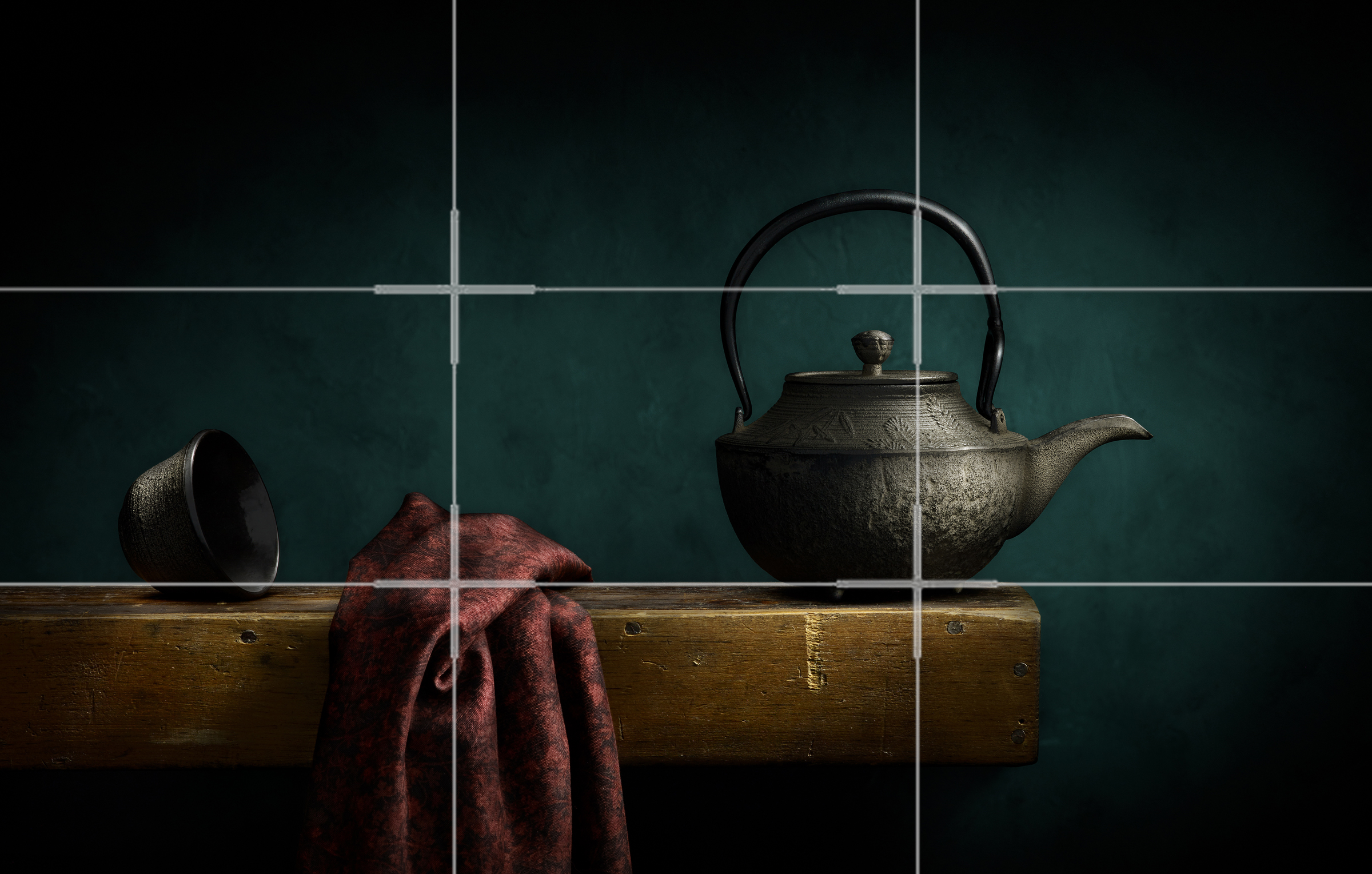
Rule of Thirds
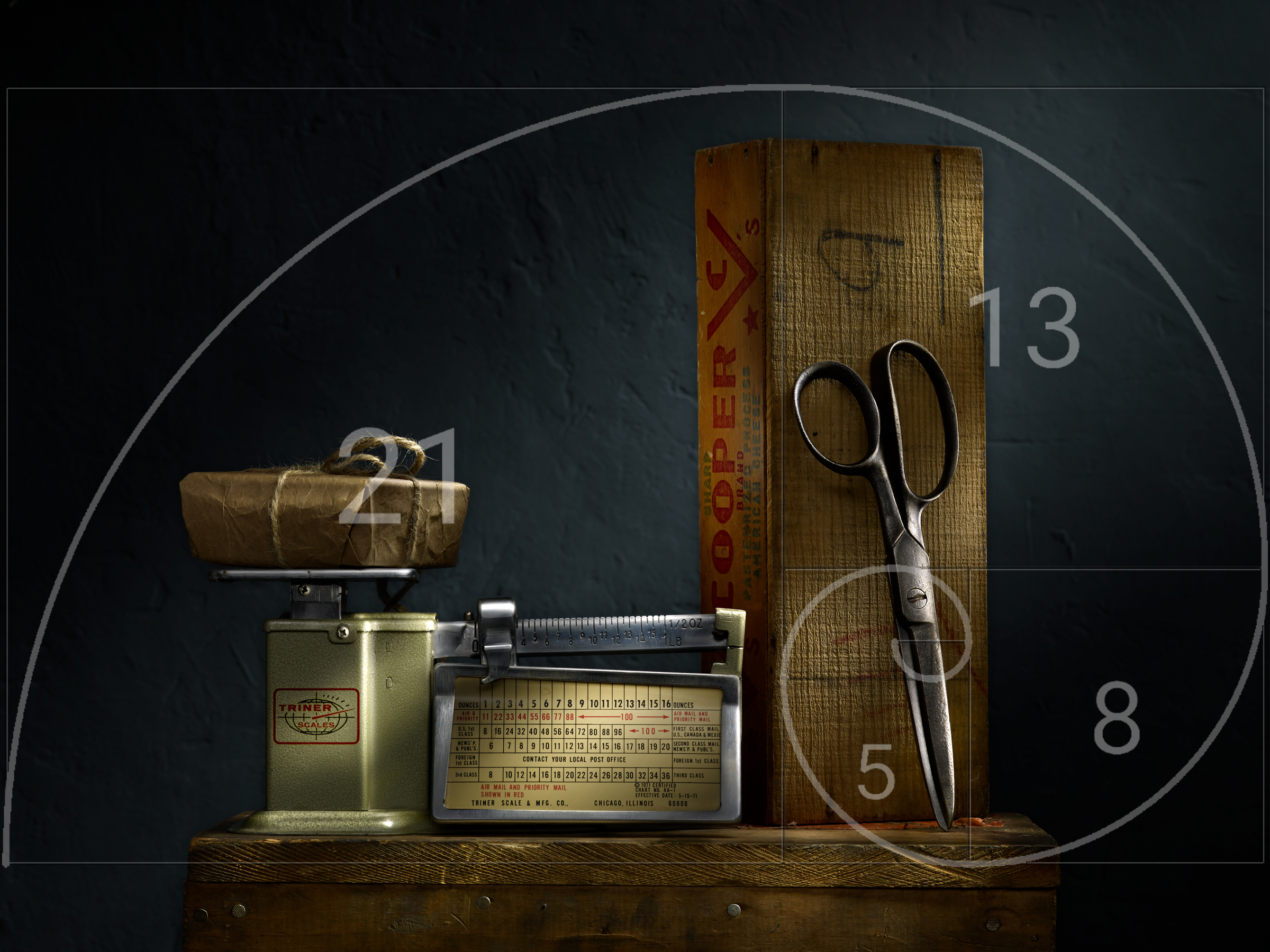
Fibonacci Sequence
Typically, I don't follow any of these "standard" rules when setting up a composition. I feel that these rules can be a bit restrictive and so my approach to composition is a little different. I believe in defining a set of definite "compositional flaws"… things that will ruin an otherwise acceptable composition. These flaws include things like "tangent points" (when two elements are just touching rather than overlapping). Tangent points create confusion in terms of depth and they create areas of tension that I personally try to avoid. I also strive not to crop too tightly. This also causes tension and a sense of claustrophobia in a composition. There is also something I call "stacking", where an element is placed behind another element and it can appear to be sitting "on top" of the front element. This also fights against the illusion of depth. There are many more of these flaws that I outline in my course's composition module. I believe that if we can avoid all compositional flaws, we will, by default, end up with an acceptable composition. In this way, we can avoid trying to follow to a handful of rules that can be quite restrictive and might actually reduce creativity in the still life.
*****
• Why is it a good idea to light paint when composing? Don't we only need to light paint after the composition is completely decided on?
I encourage my students to light paint during the composition phase.
Why? If we don't see the drama that we get with light painting when judging composition, we will be underwhelmed when judging it, and very often the result of that is that we feel we need to add more subjects to make the image more interesting. The truth is that by adding more subjects, we create a "busy" image and we can overwhelm the viewer with information rather easily.
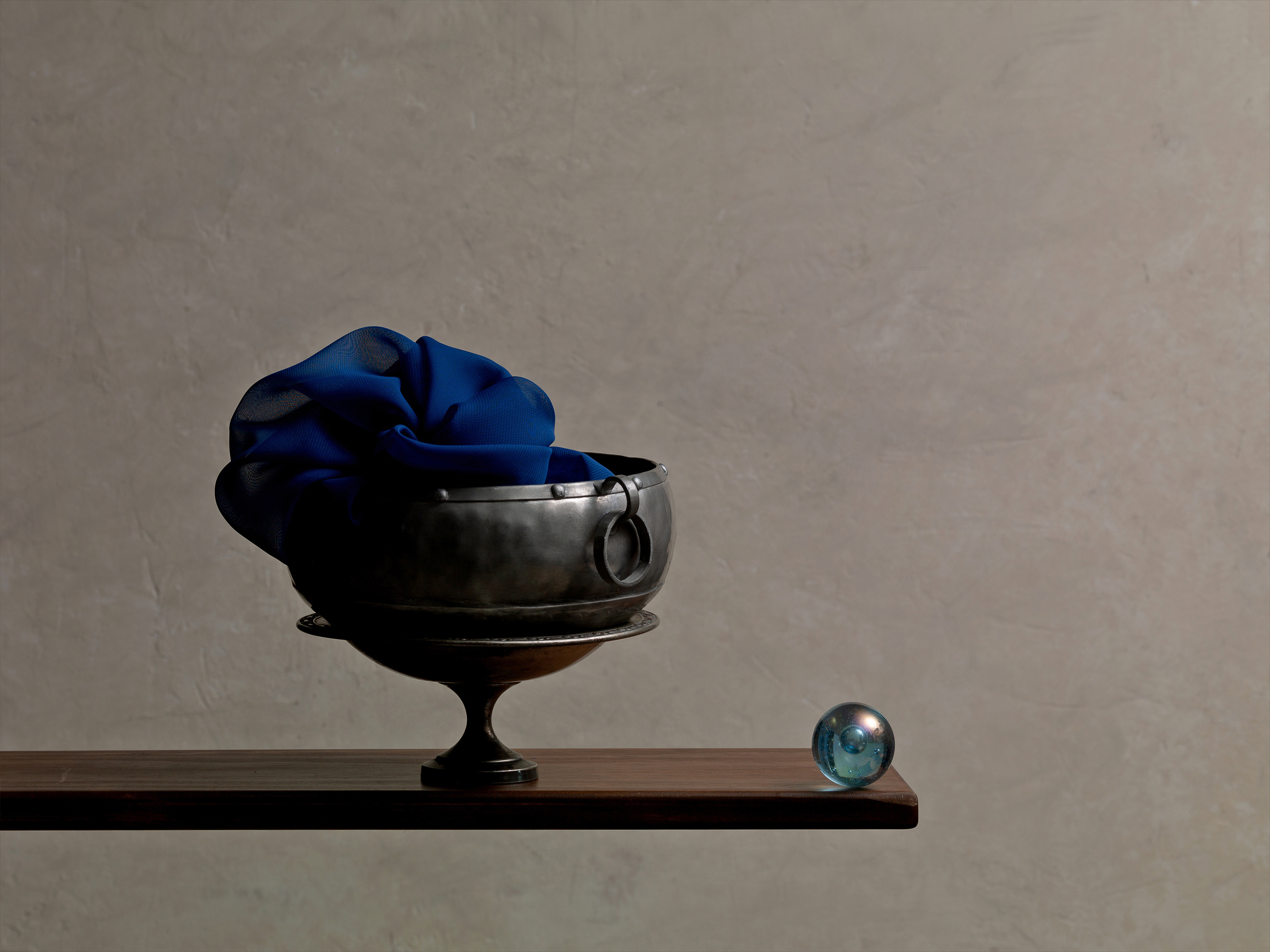
Composition seen under "room lights"
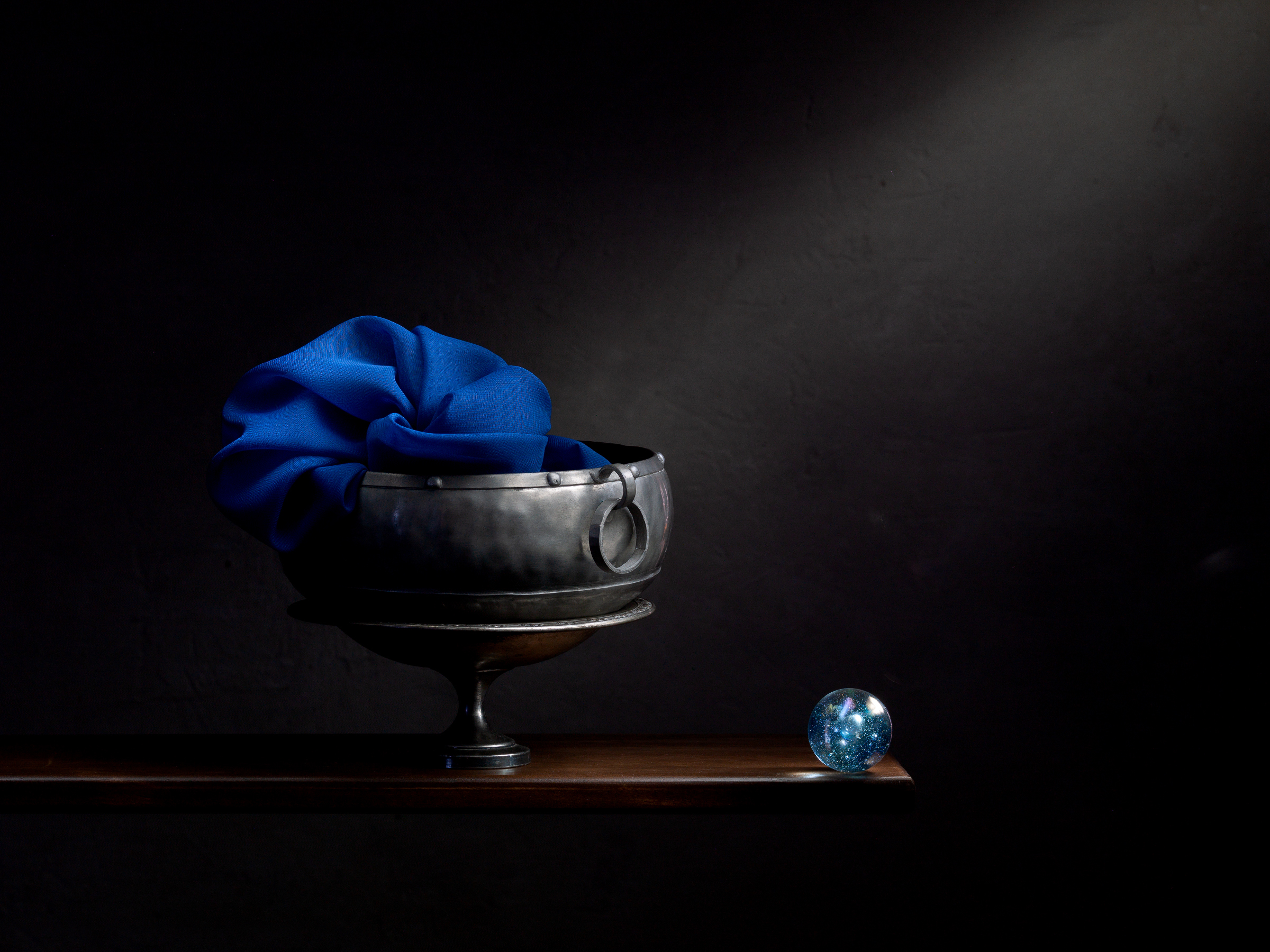
Composition seen with light painting
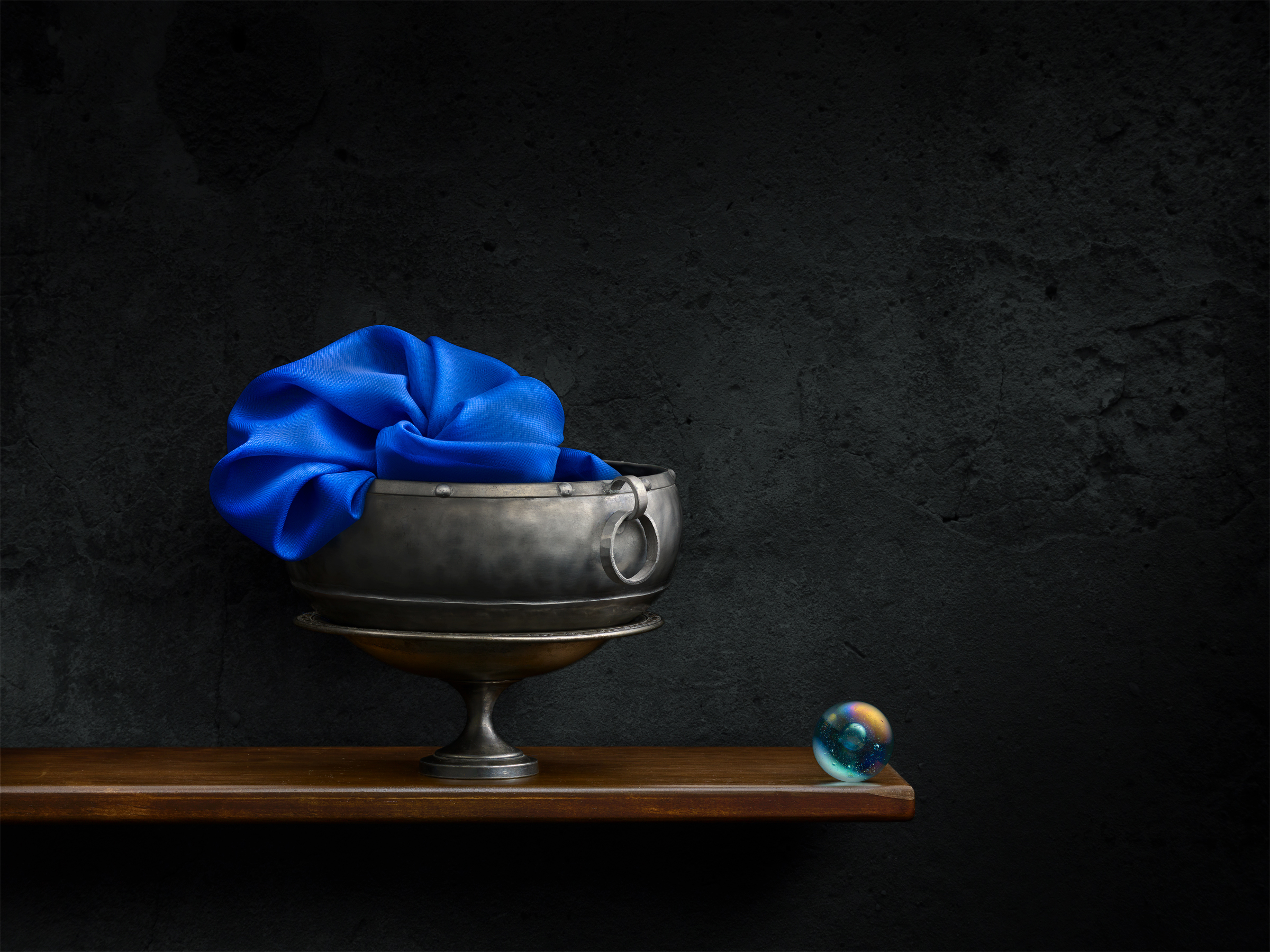
Final Edited Image
One can certainly point to the Dutch Master painters' "Pronkstilleven" style of painting, which featured a large number amount of objects within a single painting.
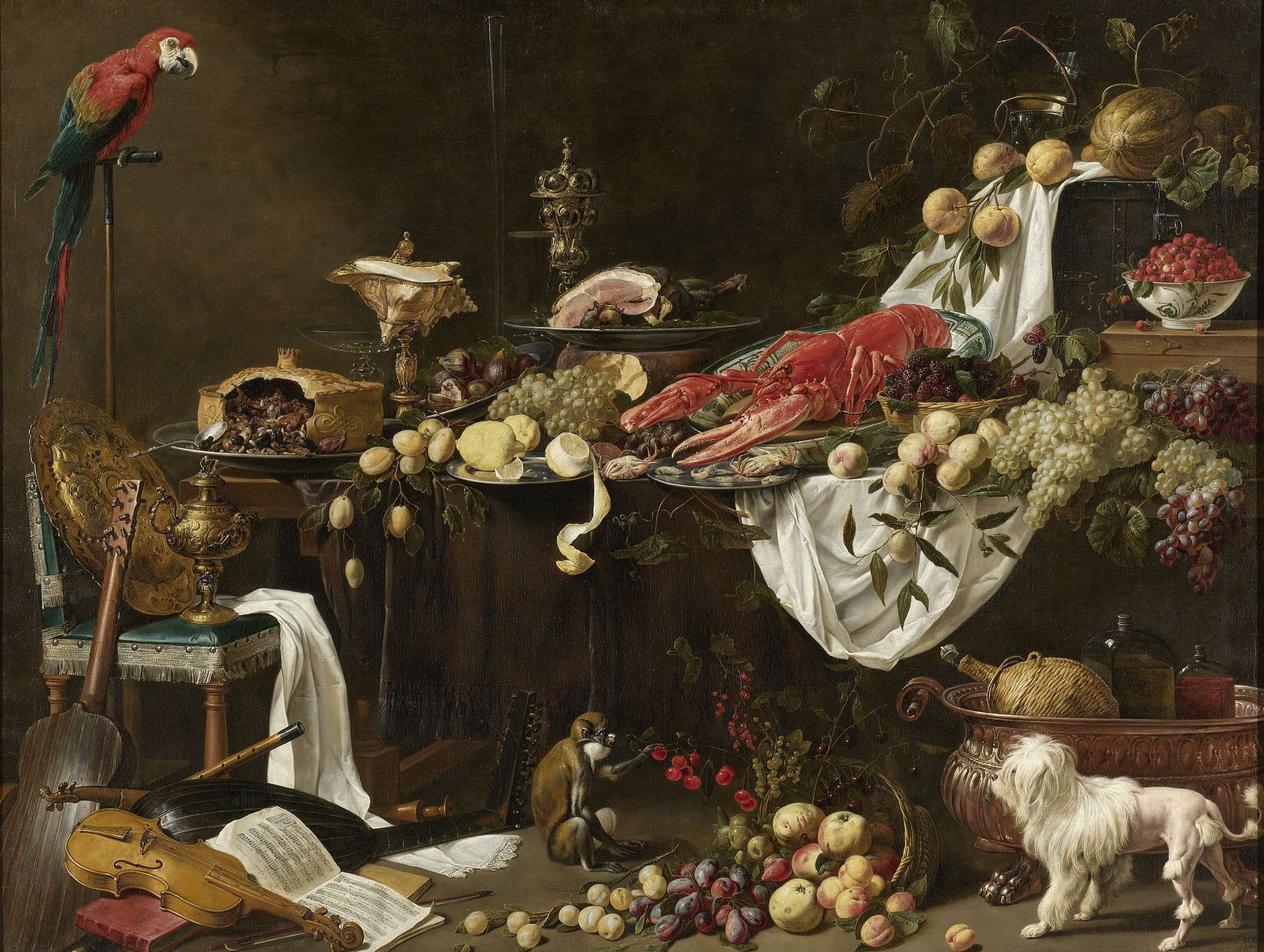
Painting by Adriaen van Utrecht, circa 1644
These paintings can also be referred to as "ostentatious" or "ornate" paintings. There is no question that they are beautiful, but keep in mind that we are photographers, not painters!
These painters showcased their exceptional skills in rendering a hyper-realistic and beautiful still life using pigment on canvas. As photographers, we achieve similar effects by manipulating light, but in my opinion, it's not necessary to include such a large number of subjects. In essence, our objective is not to replicate the painting style fifty or seventy-five times within a single image solely to impress our viewers. Photography is a distinct medium with a unique aesthetic appreciation for the actual subject.
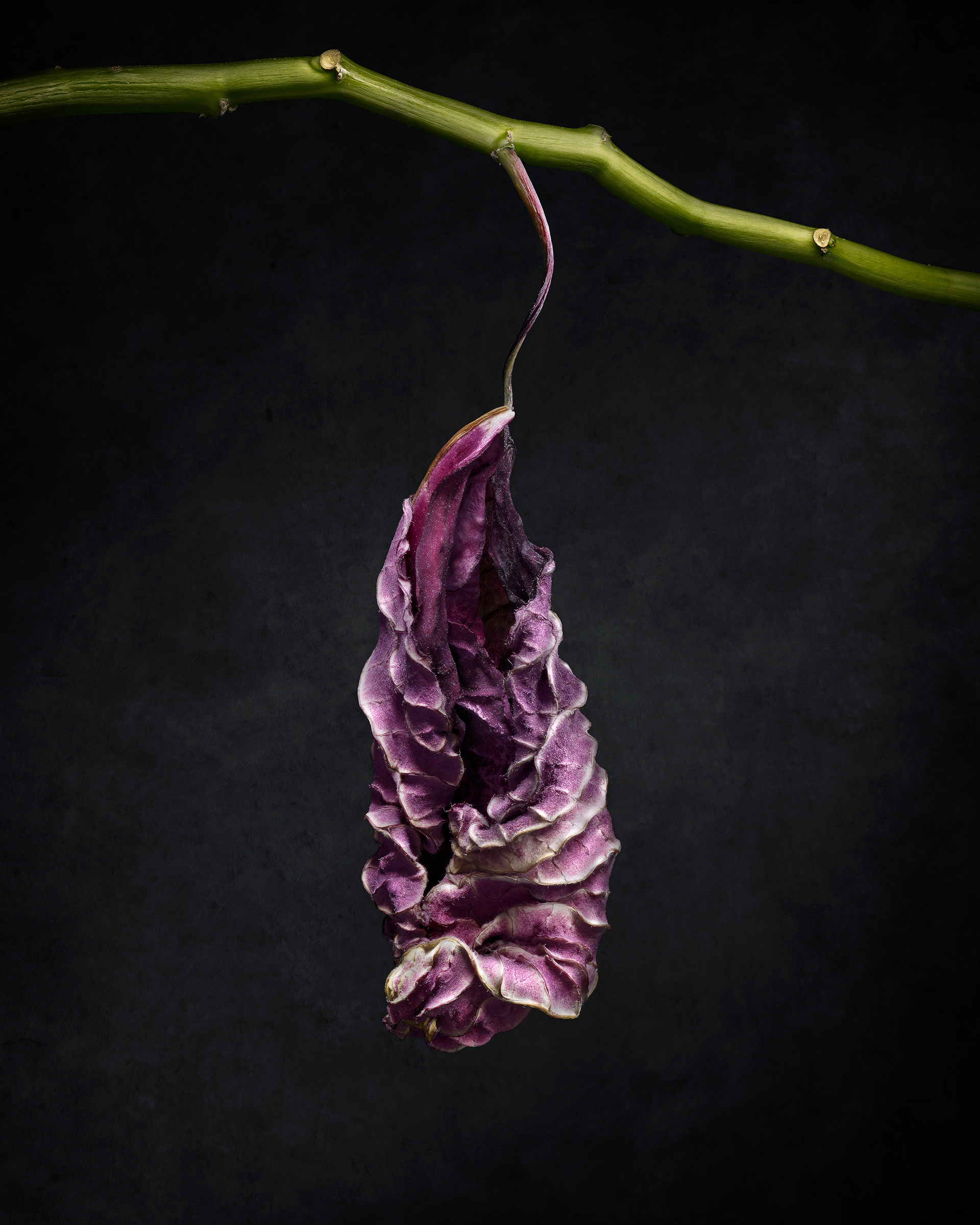
Leaf Study #1 ©Harold Ross
*****
• When is it time to begin the actual shoot?
First of all, this question can only be answered if one has already light painted their composition. Then, in addition to seeing it in a "good light", which adds to the impact of the capture we are judging, the composition should feel "balanced"… And for me, this is more of a feeling than some mathematical equation. Remember that "balance" does not mean that there is measurable equal distance, let's say, between the left side border and the right side border and the subject matter. Instead, it should be "visually balanced", which means that it feels comfortable. This is probably not something that can be put into definitive terms, but one will develop the skill to see this as they work more and more with composition. The light that we plan on including on the background can actually affect this balance, so it is helpful when we gain a bit of experience with that!

Still Life with Jug and Seed Pods ©Harold Ross
Once the composition is finalized and we are happy with it, we must now set a critical focus point, straighten the camera (actually plumb), and check the depth of field. I can't tell you how many images I've seen that are shot without having the camera level! Once we have a correctly placed critical focus point, the camera is plumb, and we have enough depth of field (while avoiding diffraction), we can begin to shoot the image in earnest (my course has a video dedicated to these important technical aspects of composing a still life image).
In upcoming blog posts, I will similarly outline all of the steps in shooting and editing!
*****
Creating light painted still life images is extremely rewarding, and something which I teach in great detail throughout my comprehensive Light Painting Online Video Course.
See some images that my students have produced here: Student Images, and what they are saying about my Online Course here: Student Testimonials.